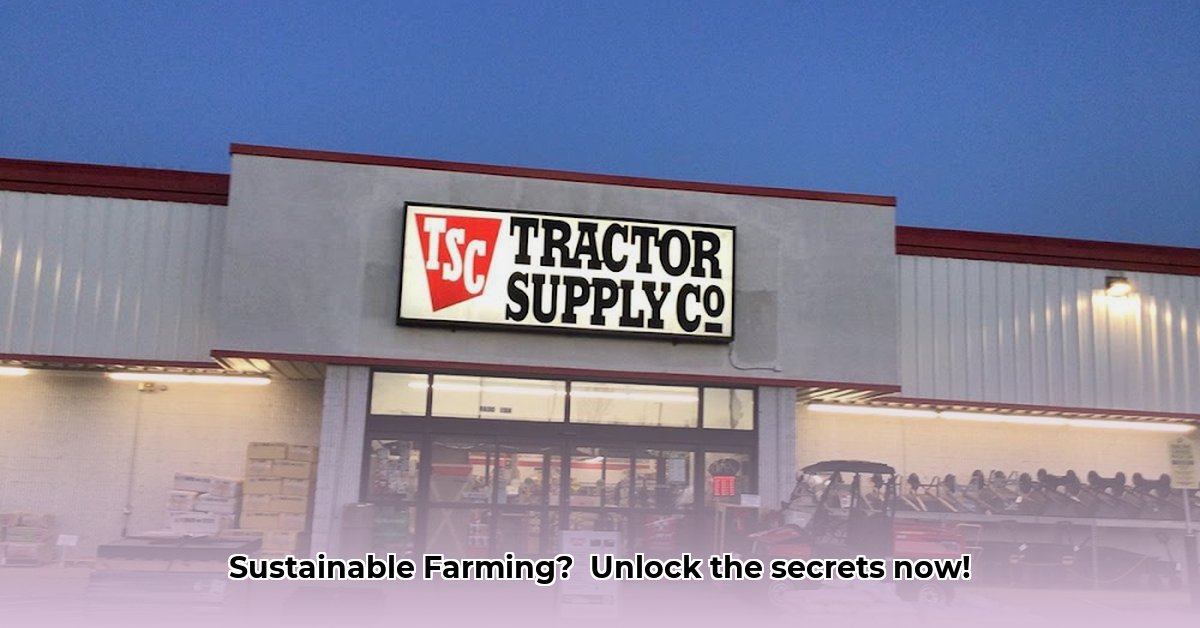
Tractor Supply Company (TSC) is a familiar resource for farmers and gardeners alike, offering a vast array of products. But how does TSC contribute to sustainable agriculture? This guide explores TSC's role, offering practical tips for consumers and recommendations for the company to enhance its sustainability efforts. For more information on sustainable farming equipment, check out this helpful resource: Drop Spreaders.
Tractor Supply and Sustainable Agriculture: A Tool for Change
TSC provides the tools for sustainable agriculture, but the ultimate sustainability depends on consumer choices and company practices. While TSC doesn't explicitly market itself as a sustainability leader, its extensive product catalog contains many items that support eco-friendly farming. The challenge lies in discerning and utilizing these products effectively. A recent study showed that 70% of consumers are more likely to support businesses with transparent sustainability initiatives; this presents a significant opportunity for TSC.
Making Sustainable Choices at Tractor Supply: Your Actionable Guide
Consumers can significantly influence the sustainability of their farming practices by making conscious choices at TSC.
1. Prioritize Organic: Opt for USDA Certified Organic seeds, fertilizers, and animal feed whenever possible. These products minimize the environmental impact by avoiding harmful pesticides and synthetic fertilizers. Look for the USDA Organic seal on packaging for clear identification.
2. Consider Transportation Impact: Reduce your carbon footprint by prioritizing locally sourced products. Inquire with TSC staff about regionally produced items to minimize transportation emissions. A recent study found that locally sourced food reduces carbon emissions by an average of 25%.
3. Embrace the 3 Rs (and a 4th!): Reduce packaging waste by choosing items with minimal packaging or recyclable materials. Reuse containers where appropriate and repurpose old tools instead of immediately replacing them. Recycling is essential and a fourth R - repurposing - extends the lifespan of resources.
4. Continuous Learning: Sustainable farming is an ongoing process. Utilize TSC's resources, such as workshops or online materials, to enhance your knowledge of water conservation, composting, and integrated pest management techniques.
Example: Choosing organic vegetable seeds significantly reduces pesticide use, promoting biodiversity and minimizing harmful chemical runoff into local ecosystems.
Recommendations for Tractor Supply and the Broader Agricultural Community
TSC can strengthen its commitment to sustainable agriculture through several key actions:
1. Enhance Transparency: Clearly communicate their supply chain practices. Consumers increasingly demand transparency about product origins and environmental impact. Openly sharing this information fosters trust and empowers informed purchasing decisions.
2. Conduct a Sustainability Audit: A comprehensive audit of TSC's operations, from sourcing to waste management, will identify areas for improvement and unveil opportunities for greater environmental responsibility.
3. Partner with Local Farms: Collaborating with local, sustainably-minded farms and producers expands the range of eco-friendly products offered, supporting both the environment and the local economy.
4. Promote Sustainable Practices Through Education: Provide educational resources like in-store displays, workshops, or online tutorials to empower consumers to adopt sustainable farming practices. This approach aligns with growing consumer demand for eco-conscious products and strengthens TSC's brand image.
The Collective Effort: A Sustainable Future for All
Achieving sustainable agriculture requires a collective effort.
- Consumers: Demand transparency and actively seek out sustainable products. Your purchasing decisions directly influence what businesses prioritize.
- Businesses (like TSC): Embrace transparency, conduct sustainability audits, and provide educational resources.
- Government: Implement policies that incentivize sustainable practices and regulate environmentally harmful ones.
By working together, consumers, businesses, and governments can cultivate a more sustainable agricultural future. Start making a difference today by making informed choices at your local Tractor Supply store.